
Modern Warehouse Management: Strategies, Automation and Sustainable Optimisation
Reading time: 7 minutes
Modern warehouses face increasing pressure to operate faster, more efficiently and with greater flexibility. Growing order volumes, shorter delivery times and labour shortages require companies to rethink how their warehouse operations are organised.
Effective warehouse management plays a central role in addressing these challenges. It ensures that inventory, material flows and operational processes are coordinated efficiently.
Modern warehouse concepts combine several elements, including structured warehouse strategies, optimised material flows, digital systems and targeted automation. Together, these factors create stable, scalable and future-ready warehouse operations.
Warehouse management as the foundation of efficient operations
Warehouse management refers to the structured organisation and coordination of all warehouse processes. This includes activities ranging from goods receipt and storage to order picking and shipping. The objective is to ensure efficient material flows, transparent inventory control and optimal use of warehouse resources.
Well-structured warehouse management ensures stable operations, short lead times and reliable delivery performance.
Choosing the right warehouse type
Selecting the appropriate warehouse type is a strategic decision that directly influences both efficiency and cost-effectiveness. Depending on the industry, product characteristics and turnover rates, different storage systems may be required.
Warehouses can generally be categorised according to:
Construction type
- Outdoor storage areas for robust goods
- Warehouse buildings for protected storage
- Specialised facilities such as cold stores or tank storage
Stored goods
- Pallet warehouses for standardised loads
- Small parts warehouses for smaller items
- Hazardous goods or specialised storage for sensitive materials
Degree of automation
- Manual warehouses
- Partially automated systems
- Fully automated warehouse solutions
Choosing the right storage concept depends on factors such as throughput, space utilisation, product structure and long-term growth plans.
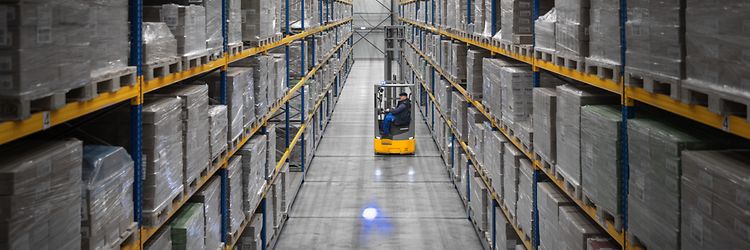
Warehouse strategies for greater efficiency
In addition to infrastructure, warehouse strategies play a decisive role in operational efficiency. A warehouse strategy defines how products are stored, where frequently picked items are located and how goods movements are organised within the facility.
Well-designed strategies help reduce travel distances, improve picking performance and ensure a structured flow of goods throughout the warehouse.
Efficient use of available space
Appropriate racking systems – such as high-bay racking or pallet racking – help maximise storage capacity.
Short travel distances
Fast-moving products should be stored in easily accessible locations to reduce picking times.
Standardised processes
Clearly defined workflows improve efficiency, reduce errors and support scalability.
High inventory accuracy
Transparent and reliable inventory data is essential for stable supply chains and accurate planning.
A well-designed warehouse strategy enables companies to adapt quickly to changing demand and operational requirements.
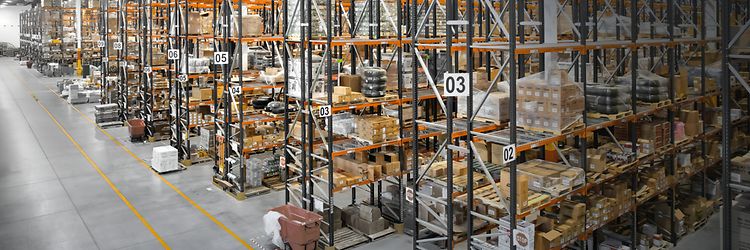
Warehouse optimisation: unlocking hidden potential
Many companies still have significant potential to improve their warehouse operations. Warehouse optimisation focuses on analysing existing processes, identifying bottlenecks and improving workflows to increase overall operational performance.
Typical optimisation measures include:
Intelligent inventory control
Effective inventory control helps companies maintain product availability while reducing unnecessary stock levels. By analysing product demand, turnover rates and storage conditions, warehouse managers can optimise stock levels and minimise capital tied up in inventory.
Process analysis and improvement
Analysing warehouse processes such as goods movements, order picking and internal transport can reveal inefficiencies. Even small adjustments to warehouse layouts or workflows can significantly improve productivity and reduce operational costs.
Increasing operational transparency
Modern warehouse management systems (WMS) provide real-time visibility of inventory and processes. This enables data-driven decision-making and improved operational control.
Effective warehouse optimisation not only reduces operating costs but also increases flexibility and delivery reliability.
Warehouse automation as a driver of efficiency
Automation is becoming increasingly important in warehouse operations. Growing order volumes, particularly in e-commerce, combined with labour shortages and rising cost pressure, are accelerating the adoption of automated solutions.
Automation does not necessarily require a complete transformation from the outset. Many companies begin by automating individual processes and expand their systems gradually.
Sustainability in the warehouse
Sustainability is becoming an increasingly important factor in warehouse operations. Rising energy costs, regulatory requirements and ESG targets are encouraging companies to rethink how their warehouses operate.
A sustainable warehouse offers several benefits:
- Lower energy consumption and operating costs
- Reduced environmental impact
- Future-proof infrastructure that supports regulatory compliance
- A stronger corporate reputation among customers and partners
Common sustainability measures include energy-efficient drive technologies, intelligent charging infrastructure, optimised material flows and environmentally friendly building concepts.
Importantly, sustainability and efficiency are not mutually exclusive. In many cases, sustainable solutions also lead to long-term cost savings.
Conclusion: integrated warehouse concepts create long-term value
High-performance warehouses are not created through isolated measures. Instead, they require a holistic approach that combines several key elements:
- efficient warehouse management
- the right warehouse infrastructure and storage systems
- a clear warehouse strategy
- continuous warehouse optimisation
- targeted automation
- and sustainable operations
Companies that integrate these factors create not only efficient logistics processes but also a strong foundation for long-term growth and supply chain resilience.

Get in touch with our specialists today!
Phone