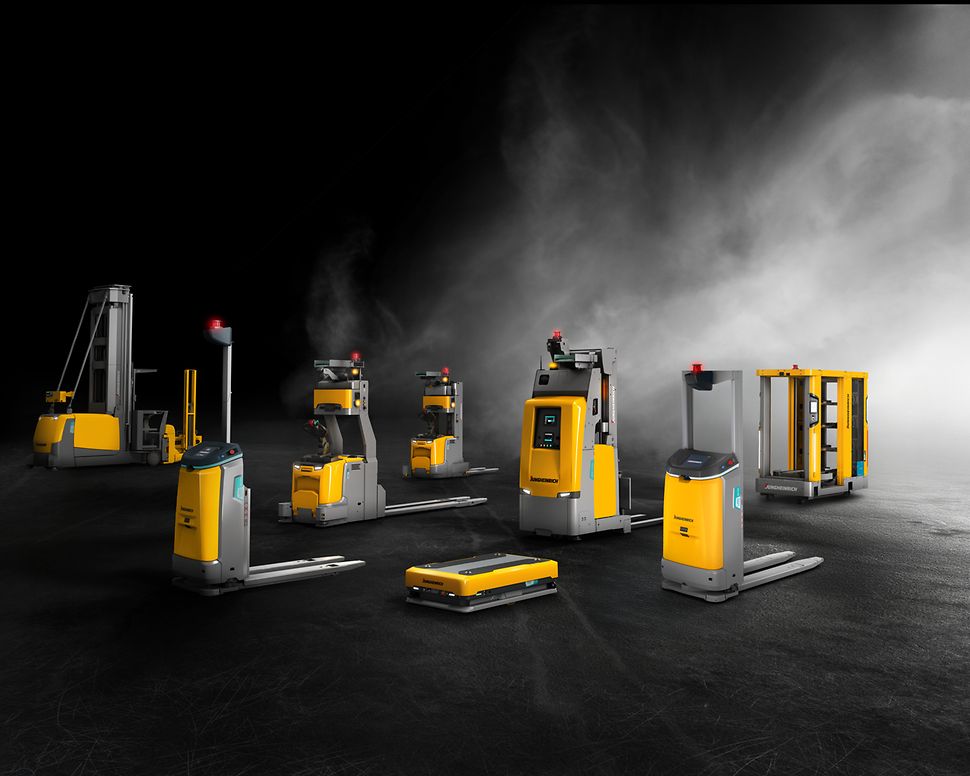
AGV vs. AMR – Which Mobile Robot is right for your Warehouse?
Reading time: 12 minutes
Warehouse logistics is undergoing a major transformation. Rising expectations for speed, accuracy and operational flexibility are encouraging companies to rethink traditional manual processes.
Mobile robots are playing a key role in this transformation. By automating repetitive transport and picking tasks, they help businesses improve efficiency, optimise material flows and make better use of available labour resources.
Two of the most important technologies in this area are Automated Guided Vehicles (AGVs) and Autonomous Mobile Robots (AMRs). This guide explains the key differences between these systems and helps you determine which solution best suits your warehouse automation strategy.
Advantages of Mobile Robots
The main benefits of mobile robots extend across productivity, cost efficiency and workplace ergonomics:
- Higher picking speed: Robots operate continuously without fatigue and process orders faster than manual picking
- Reduced error rates: Sensors and control systems ensure accurate item selection
- Increased efficiency: Optimised route planning and automated workflows maximise throughput
- Improved ergonomics: Employees are relieved of heavy, repetitive or monotonous tasks
- Scalability: Additional robots can be deployed easily to handle peak volumes
- Lower operating costs: Reduced labour costs and fewer picking errors lead to measurable savings
Disadvantages of Mobile Robots – Challenges and how to address them
While mobile robots offer significant advantages, there are also challenges to consider. Jungheinrich’s operational team has prepared a clear overview along with practical solutions to manage these effectively.
| Challenge | Description | How to Mitigate |
|---|---|---|
| High initial investment | Acquisition and implementation costs can be substantial | Phased automation, financing options and ROI-based planning |
| System integration | Integration with existing WMS and IT systems can be complex | Work with an experienced automation partner |
| Maintenance requirements | Regular servicing is essential to ensure availability | Preventive maintenance and service agreements |
| Limited flexibility | Not all robots can handle every item shape or environment | Hybrid solutions combining robots and manual picking |
| Operational dependency | System downtime can affect picking performance | Redundancy concepts and predictive maintenance |
What are AGVs (Automated Guided Vehicles)?
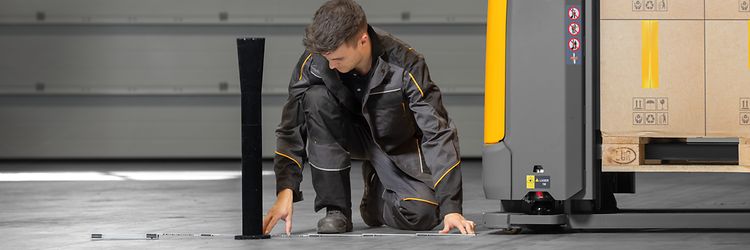
AGVs have been used successfully in warehouse logistics for decades. These driverless transport systems follow predefined routes that are set using physical or virtual guide paths such as inductive wires, magnetic strips or laser-based positioning systems.
AGVs are particularly well suited to structured environments with predictable processes.
Advantages of AGVs
- High reliability: Proven technology for stable, repetitive transport tasks
- High load capacities: Ideal for transporting heavy pallets and goods
- Mature technology: Well established, with predictable performance and behaviour
Limitations of AGVs
- Low flexibility: Route changes require technical modifications
- Limited obstacle handling: AGVs typically stop when obstacles appear
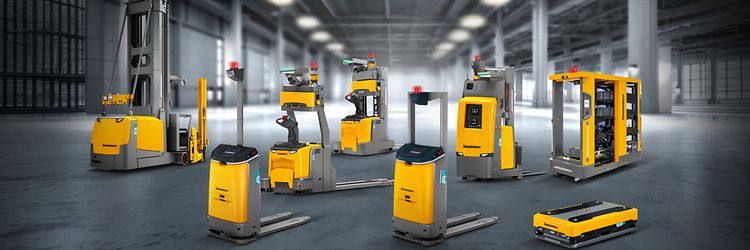
What are AMRs (Autonomous Mobile Robots)?
AMRs are autonomous warehouse robots that navigate freely without fixed guide paths. Using sensors, cameras and intelligent software, they map their surroundings, detect obstacles and dynamically calculate the most efficient routes.
AMRs are designed for modern, fast-changing warehouse environments.
Advantages of AMRs
- High flexibility: Adapt dynamically to layout changes and variable workflows
- Fast deployment: No physical guide infrastructure required
- Autonomous navigation: Real-time obstacle detection and avoidance
- Scalability: Easy to expand fleets as throughput requirements grow
Limitations of AMRs
- Higher acquisition costs: Typically more expensive per unit than AGVs
- Complex software requirements: Greater reliance on IT and system integration
AGV vs. AMR: Differences at a Glance
The primary distinction between AGVs and AMRs lies in navigation and adaptability. Jungheinrich’s editorial team has crafted the following table that displays the differences in a very practical format:
| Feature | AGV (Automated Guided Vehicle) | AMR (Autonomous Mobile Robot) |
|---|---|---|
| Navigation | Fixed routes using guidelines or markers | Autonomous navigation with dynamic route planning |
| Flexibility | Low | High |
| Installation effort | High (infrastructure required) | Low (minimal infrastructure) |
| Obstacle handling | Stops or follows predefined logic | Detects and avoids obstacles in real time |
| Acquisition costs | Often lower | Often higher |
| Operating environment | Static, predictable | Dynamic, changing |
| Adaptability | Limited | High (software-based) |
| Maintenance focus | Guide path infrastructure | Software, sensors and diagnostics |
Selection Criteria: Which Warehouse Robot fits your requirements?
Choosing between AGVs and AMRs depends on your operational priorities. The table below helps structure the decision.
| Key Question | Jungheinrich recommends AGV if… | Jungheinrich recommends AMR if… |
|---|---|---|
| Warehouse dynamics | Processes are stable and repetitive | Layouts and workflows change frequently |
| Load requirements | Heavy pallets or large loads are transported | Lightweight to medium loads dominate |
| Automation scope | Transport tasks are clearly defined | Flexible task allocation is required |
| Infrastructure | Guide paths can be installed | Minimal structural changes are preferred |
| Scalability | Throughput is predictable | Seasonal peaks or growth are expected |
In many cases, hybrid solutions combining AGVs and AMRs deliver the best results. With over 70 years of experience in warehouse logistics, Jungheinrich can support you identifying the optimal setup for your warehouse. k
Making your warehouse future-proof with Jungheinrich
Warehouse automation will continue to evolve towards intelligent, connected and adaptive systems. Technologies such as Artificial Intelligence (AI) and Machine Learning (ML) are already shaping the next generation of warehouse robots.
Future developments include:
- Predictive demand forecasting: AI-driven optimisation of inventory and transport flows
- Dynamic route optimisation: Real-time adjustment of AMR routes based on warehouse conditions
- Predictive maintenance: Reduced downtime through early fault detection
- Enhanced human–robot collaboration: Safer and more intuitive cooperation
- Autonomous decision-making: Systems that independently adapt to disruptions
- Sustainable automation: Energy-efficient robots and optimised route planning
The warehouse of the future will not only be faster, but also more flexible, resilient and sustainable.
Automate your warehouse the right way with Jungheinrich
Jungheinrich is a leading provider of intralogistics solutions, offering both AGVs and AMRs as part of a comprehensive automation portfolio.
We support you from initial analysis through planning, implementation and long-term operation.
Jungheinrich Services for Automating Your Warehouse
- Intralogistics consulting: Process analysis and automation strategy
- Warehouse planning: Layout, material flow and system design
- Software integration: End-to-end IT connectivity
- Service & maintenance: High availability and performance
- Training: Safe and efficient system use
Jungheinrich Products for Warehouse Automation
- Automated Guided Vehicles (AGVs): For fixed, repetitive transport tasks
- Autonomous Mobile Robots (AMRs): For flexible transport in dynamic environments
- Warehouse Management Software (WMS): Central process control
- Automated high-bay warehouses: Efficient large-scale storage
- Picking and transport systems: End-to-end automation of material flow
Conclusion: AGV or AMR — The right choice depends on your warehouse
Both AGVs and AMRs play an important role in modern warehouse automation. The optimal solution depends on warehouse layout, process stability, load requirements and long-term growth plans.
With Jungheinrich, you benefit from expert consulting, proven automation technologies and tailored solutions designed to maximise warehouse efficiency.
Find your ideal automation solution now and speak to our experts.

Get in touch with our specialists today!
Phone